Hiring a DJ looks simple until the music stops mid-reception, the wrong person shows up, or the dance floor never fills.
The difference between a great event and an awkward one usually comes down to preparation. A professional DJ does far more than press play. They manage the energy of your room, keep your event on schedule, read a crowd well enough to know when to shift gears, and make announcements that land. Choosing the wrong one doesn’t just leave you with bad music. It can derail the entire night.
These 10 questions will help you separate professionals from people who just own speakers. Whether you’re planning a wedding, corporate event, school dance, or private party, these are the conversations worth having before you sign anything.
1. Will you personally be the DJ at my event?
This is the most overlooked question on the list and one of the most important. Many DJ companies take your booking and assign whoever is available. You could spend an hour on a call with an experienced DJ, feel great about it, and have a completely different person show up.
Ask directly:
• Will you personally perform at my event?
• If not, can I meet or speak with the DJ assigned before the event date?
Red flag: Any hesitation about confirming who will actually show up is worth paying close attention to.
2. How many similar events have you done in the last 12 months?
Experience matters, but recent experience matters more. A DJ performing 30-50 events per year is actively sharpening their skills, staying current with music trends, and working through real-world situations regularly. Someone doing a handful may be technically capable but is far less battle-tested.
Pro tip: For weddings and large corporate events, look for a DJ with at least 20-30 events in the past year. For school dances and private parties, relevant experience with similar crowd types matters more than raw volume.
3. Do you bring backup equipment?
Equipment fails. Professionals prepare for it. A serious DJ should carry:
• Backup laptop and controller
• Spare cables and redundant audio paths
• A clear plan for switching systems mid-event if needed
Ask them directly: “If your main system fails mid-event, what happens?“
4. Are you insured?
Liability insurance is non-negotiable. Many venues require vendors to carry general liability coverage as a condition of entry. If your DJ is uninsured and something goes wrong, a cable causes a trip, or equipment damages the venue, liability can fall on you or the venue.
A professional will provide a certificate of insurance without hesitation. If they become vague when you ask, that tells you something about how they run their business overall.
5. Can I give you a do-not-play list?
Every event has songs that will clear a dance floor. A professional DJ will not only accept a do-not-play list, they will ask you for one during planning. How a DJ responds to this question reveals whether they are working for your event or planning to run their own set with your guests as the audience.
Pro tip: Come to your first DJ meeting with three lists: must-play songs, play-if-possible songs, and an absolute do-not-play list. How they respond to all three tells you everything.
6. How do you handle guest song requests during the event?
Good DJs filter requests. They do not blindly accept or reject them. A DJ who takes every request without judgment will eventually get handed something that kills the momentum entirely. A DJ who ignores all requests misses opportunities to connect the crowd to the music.
The right answer is in the middle: a DJ who uses requests as crowd intelligence, weighing each one against the current energy and the preferences you have already established.
Pro tip: Ask them to give you an example of a request they declined and why. Their answer shows how they think in real time , not just what they play.
7. Do you act as an emcee and manage the event timeline?
At weddings and corporate events especially, the DJ is often the de facto emcee, announcing entrances, signaling speeches, coordinating with caterers, and managing transitions between program elements. Ask whether they work from a written timeline and what they do when one element runs over.
A DJ who has never thought about this will be reactive rather than proactive on your event day.
8. Have you worked at my venue before?
This is not a disqualifying question, a great DJ can work a venue they have never seen. But prior venue experience means they already know the load-in logistics, acoustics, power access, sound restrictions, and which staff to coordinate with. That familiarity translates directly into fewer surprises on the day.
If they have not worked your venue, ask whether they are willing to do a walkthrough before the event. A DJ who takes that seriously is taking your event seriously.
9. What does your contract cover, and what could cost extra?
Any DJ operating without a written contract is not running a professional business. Read it carefully and clarify every line before signing. Common add-ons that catch clients off guard:
- Setup and breakdown time beyond contracted event hours
- Travel fees beyond a standard service radius
- Uplighting, wireless microphones, or additional equipment
- Overtime rates if the event runs long
- Early load-in fees for venues with specific access windows
10. What is your backup plan if you cannot make it?
This is the question most people feel awkward asking — and the one that matters most. A solo DJ with no network and no contingency plan is a single point of failure for your entire event.
Ask directly: “If you were sick the morning of my event, what would happen?”
A professional will walk you through the exact process. A company with multiple entertainers will have a clear coverage structure already in place.
Common DJ Red Flags to Watch For
These warning signs can show up before the event even starts. Take them seriously.
- No written contract offered
- Cannot confirm who will actually perform at your event
- No proof of liability insurance
- No backup equipment or vague answer about contingency
- Slow or inconsistent communication during the booking process
- Immediately pivots to pricing without asking about your event
- Resists or dismisses your do-not-play list
School Events: Availability Tightens Faster Than Expected
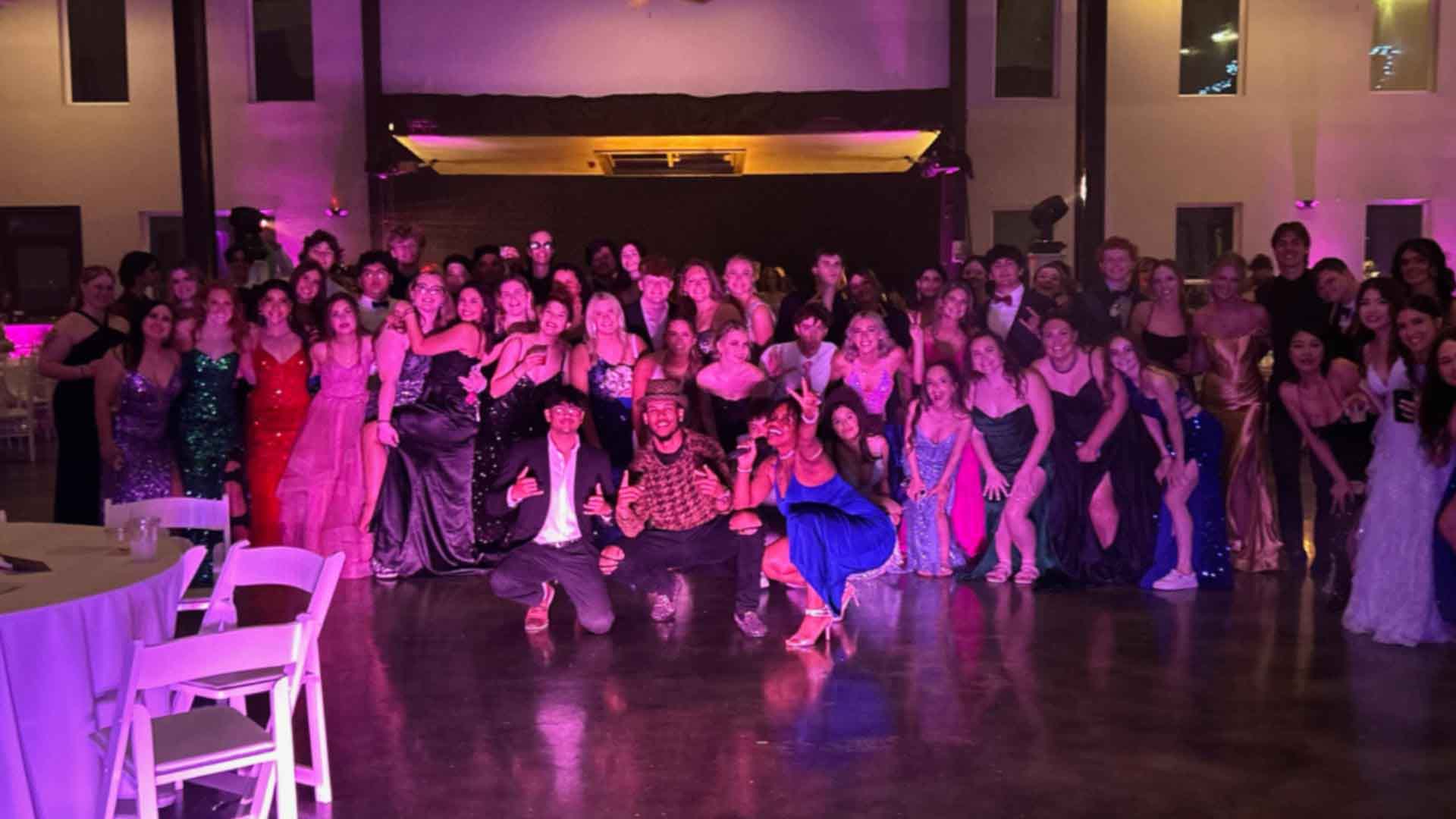
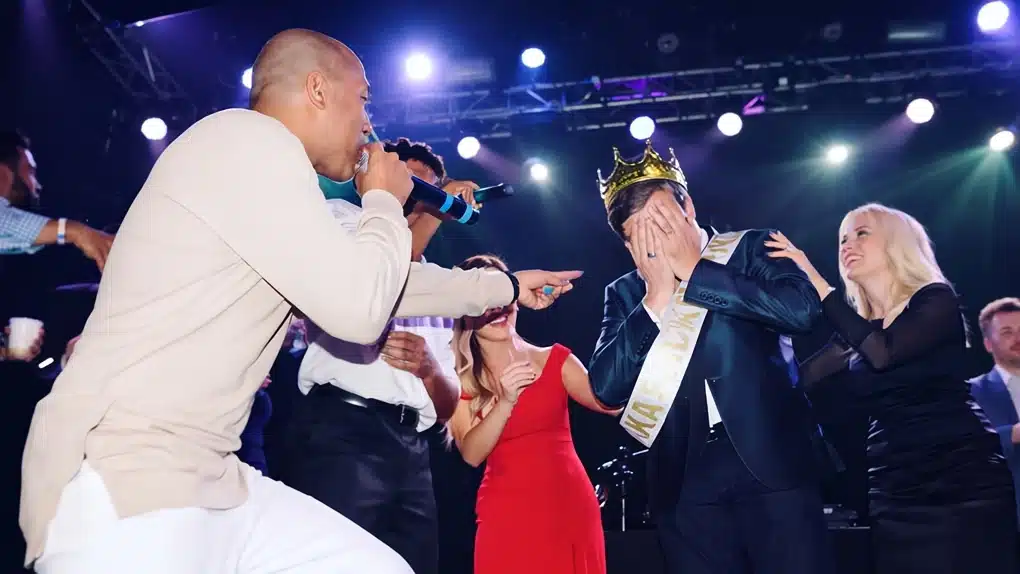
Proms, homecoming dances, winter formals, and graduation celebrations all cluster into narrow windows in the school calendar. Proms and spring dances tend to land in April and May, which also overlaps with wedding season. That competition for dates is real. Experienced DJs and entertainment companies are fielding both types of bookings simultaneously during those months.
Student activity committees and school administrators often underestimate how early this planning needs to start. A committee that forms in January to plan a May prom is already behind relative to the entertainment market. Starting the search in September or October for a spring event is not too early. It is appropriate given how quickly popular dates fill.
School events also benefit significantly from entertainment teams who have done this type of event before. Reading a high school crowd is a different skill set than managing a corporate dinner or a wedding reception. Working with a vendor early gives time to verify that relevant experience and build the planning relationship properly.
What Actually Happens When You Wait Too Long
Yes, and it is worth being honest about this. Last-minute bookings happen, and they can work out. Cancellations create unexpected availability. Newer entertainers actively build their portfolios and may be available on short notice. For lower-stakes events with flexible expectations, a late booking is not necessarily a crisis.
The honest caveat is that last-minute availability and last-minute quality are not always the same thing. When you are booking close to the date, you have less time to vet the vendor properly, less time to build a planning relationship, and less ability to course-correct if something does not feel right. Those are real limitations.
If you find yourself in a last-minute situation, focus on the essentials: confirm who will personally perform, verify insurance, ask about backup equipment, and get a written agreement before any money changes hands. The 10 questions framework applies even more urgently when the timeline is compressed.
Your Pre-Booking Hiring Checklist
Before you sign a contract with any DJ, confirm all of the following:
- You know the exact name of the DJ who will perform at your event
- They have recent, relevant experience with your event type
- They carry backup equipment and have a specific contingency process
- They are insured and can provide a certificate on request
- They accept and will follow a do-not-play list
- They manage the event timeline, not just the music
- You have a written contract with all services and costs clearly defined
- They have a named backup plan if they cannot perform on the day.
If any of those are missing, keep looking.
The last 45 minutes of prom are as important as the first 45. Students who stay until the end are the ones who tell the story of the night. Plan for them deliberately.
The DJ Sets the Energy of Your Entire Event
A DJ doesn’t just play music. They control energy, transitions, announcements, and crowd flow from the first song to the last. Choosing carefully prevents the majority of event-day stress and makes the difference between a night people remember and one they politely forget.
Thirty years of working events has taught us one consistent truth: the best DJs ask as many questions as you do. They want to understand your event, your guests, and your goals before they ever start talking about music.
If you’re in the planning stages and want to talk through what entertainment actually fits your crowd and your event, no pressure, no package pitch, we’re ready to help.
Explore our services:
Call or text (214) 267-8974
Visit greatmusicandgames.com to explore the full range of entertainment services
Great Music & Games | Professional DJ & Event Entertainment | Dallas-Fort Worth | (214) 267-8974