Why Proms Fail — and Why That’s Usually Avoidable
A prom does not need to be exceptional to be memorable for the wrong reasons. Students who leave early, stand around the edges of an empty dance floor, or spend the night waiting for something to happen will talk about that experience too — just not the way anyone planned.
The most common prom failures share the same underlying cause: the planning process focused on what the event would look like rather than how it would feel. Significant budget went to decor, table settings, and a theme that photographs well. Considerably less thought went into energy management, entertainment pacing, and the moment-to-moment experience of a student standing in that room.
The result is an event that looks impressive in the promotional materials and falls flat in real time. Students who were genuinely excited in the weeks leading up to prom leave the venue by 9:30 because there was nothing pulling them to stay.
Students do not talk about centerpieces. They talk about the night the DJ read the room perfectly, the moment everyone sang along to the same song, and the energy that made them stay until the last song played.
Most of this is correctable with better planning priorities — not a larger budget.
Start With the Experience, Not the Theme
Themes are useful. They give the event visual coherence, help with decor decisions, and give students something to anticipate. But themes are a design framework, not an experience strategy. A theme answers what the event looks like. It says nothing about how students will feel while they are there.
The experience is determined by different factors entirely: how the energy is managed across the night, whether students feel included and invited to participate, whether transitions between program elements feel smooth or awkward, and whether the entertainment is calibrated to the actual crowd in the room rather than a generic version of what a prom is supposed to be.
A well-executed prom with a modest theme will outlast an overproduced one with a spectacular theme in students’ memories — because students encode experiences, not aesthetics.
Planning priority: For every hour spent on theme and decor decisions, spend equal time on the entertainment flow, energy arc, and program pacing. One shapes how the event looks. The other shapes how it feels.
Build an Energy Arc for the Night
A prom that works is not a static event. It moves through distinct phases, each with its own energy level and purpose. Planning those phases deliberately — rather than letting the night unfold on its own — is one of the highest-impact decisions you can make.
Arrival and Social Period
Early arrivals are not yet a crowd. They are individuals and small groups finding their footing. This phase calls for upbeat, familiar music at a moderate energy level — present enough to signal the event has started, measured enough to allow conversation and photo-taking without demanding participation. Pushing energy too hard too early loses students who have not settled in yet.
Energy Ramp-Up
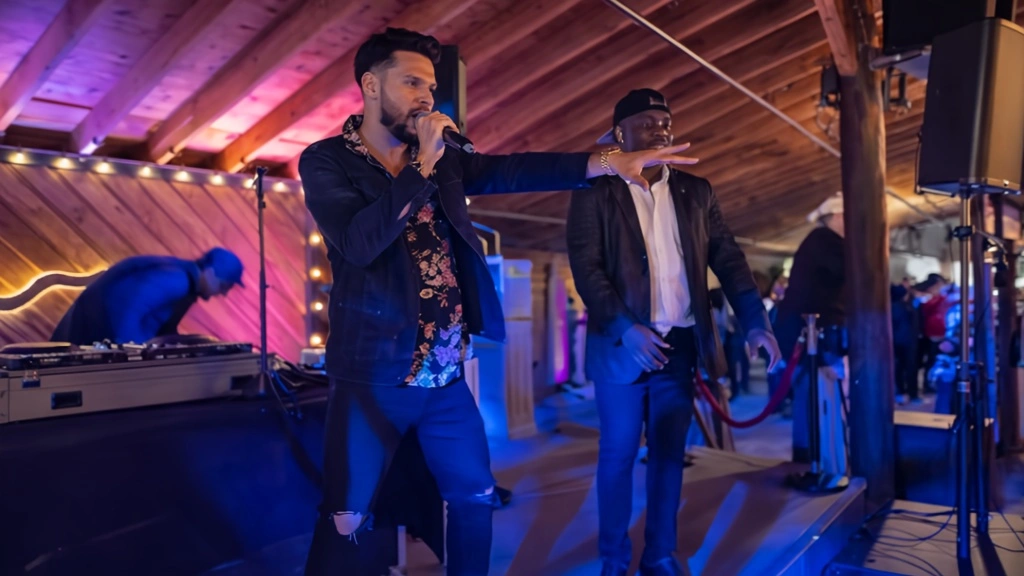
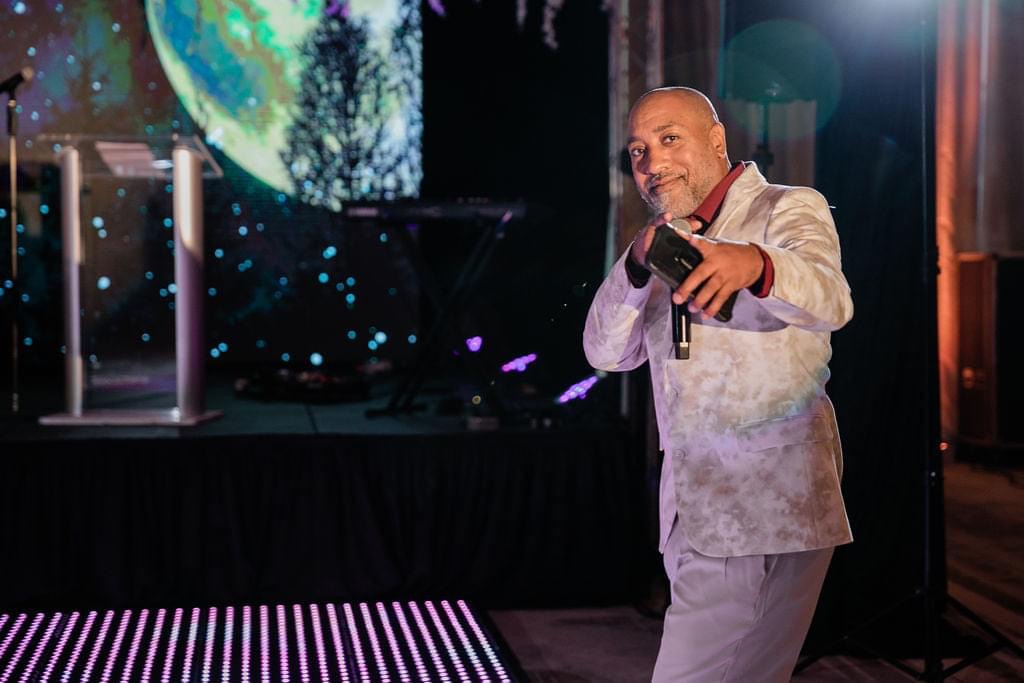
This is the transition from social gathering to event. The music becomes more intentional, the tempo builds, and the entertainment starts actively directing the room rather than serving as background. This is also when the MC — if one is present — earns their place, bringing energy and attention to the floor without forcing it.
Common mistake: Playing high-energy dance tracks before students are ready to dance creates an awkward gap between what the entertainment is asking for and what the crowd is prepared to give. The floor stays empty and the energy collapses before it ever builds.
Peak Dance Window
The core of the night. Music selection, tempo, and crowd reading all matter most here. The entertainment should be actively managing the floor — watching which songs are filling it, which ones are emptying it, and adjusting in real time. This is not a pre-set playlist moment. It is active performance.
Late-Night Final Stretch
This phase is where many proms quietly fall apart. The energy that peaked an hour earlier begins to dissipate, students start trickling out, and the dance floor shrinks. A well-planned late-night strategy anticipates this drop and counters it with intention — a strong musical push, a high-energy crowd moment, or a memorable final song that gives students a reason to stay through the end.
The last 45 minutes of prom are as important as the first 45. Students who stay until the end are the ones who tell the story of the night. Plan for them deliberately.
Prom Night Energy Snapshot
- First 30 minutes: Social + orientation
- Next 45 minutes: Energy build
- Middle window: Peak dance floor
- Final hour: Sustained momentum
- Last song: Intentional emotional close
Involve Students Without Losing Control
Student involvement in prom planning consistently improves the outcome. Students who had input into the music, voted on a photo experience, or helped shape any element of the night arrive with a sense of ownership that translates directly into participation.
Practical ways to involve students without surrendering administrative structure:
- Music preference surveys: A simple pre-prom survey asking for favorite artists, genres, and must-play songs gives entertainment professionals genuinely useful input. It also gives students the experience of being heard.
- Voting on specific elements: Photo booth style, a specific late-night moment, or a theme sub-element can be put to a student vote. The outcome matters less than the participation — students who voted feel invested.
- Student ambassador roles: Designating a small group of student representatives to liaise between the planning committee and administration creates a feedback channel without diffusing decision-making authority.
The limit of student involvement is the point where administrative judgment and safety structure need to remain in place. Supervision positioning, venue rules, timeline management, and vendor coordination are not areas for student input. The distinction between where student voice adds value and where it creates confusion is worth establishing clearly in the planning process.
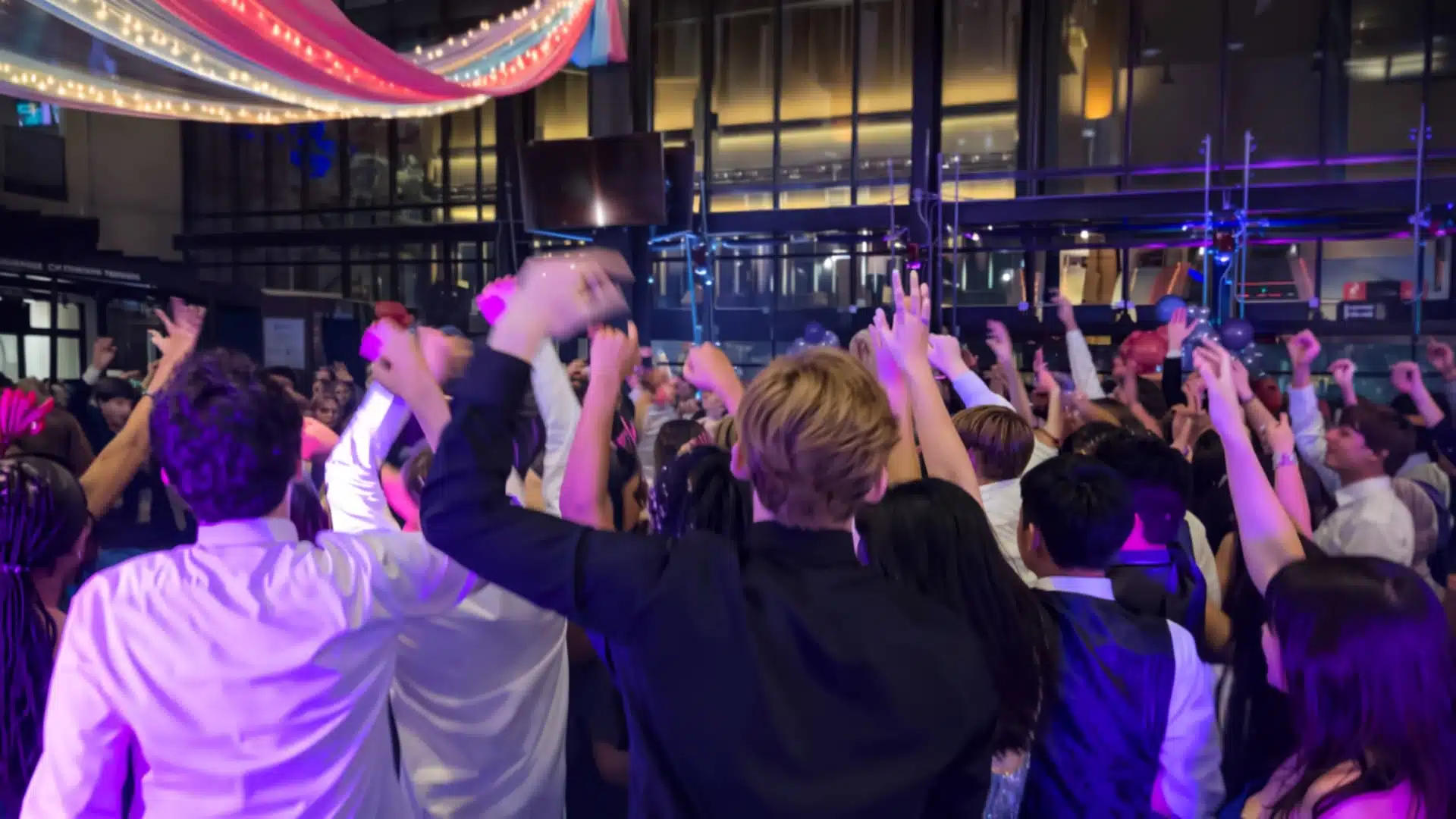
Entertainment Strategy That Actually Works
Entertainment at a prom is not decoration. It is the primary driver of whether students engage, stay, and remember the night. The decisions made here matter more than almost any other planning element.
Professional DJ vs. Playlist
A curated playlist cannot read a room. It cannot respond when a song clears the dance floor, adjust the energy when students are ready to peak, or make the split-second decisions that keep a crowd moving. A professional DJ with school event experience does all of those things continuously. For an event where crowd management is central to the outcome, the difference is not marginal.
Lighting
Lighting does more psychological work at a school dance than most planners account for. The right lighting creates an environment where students feel comfortable on the dance floor — neither fully exposed nor lost in total darkness. Dynamic lighting that responds to the music amplifies energy peaks and signals to the crowd that something is happening. Static or inadequate lighting is one of the more common invisible killers of prom energy.
Interactive Elements
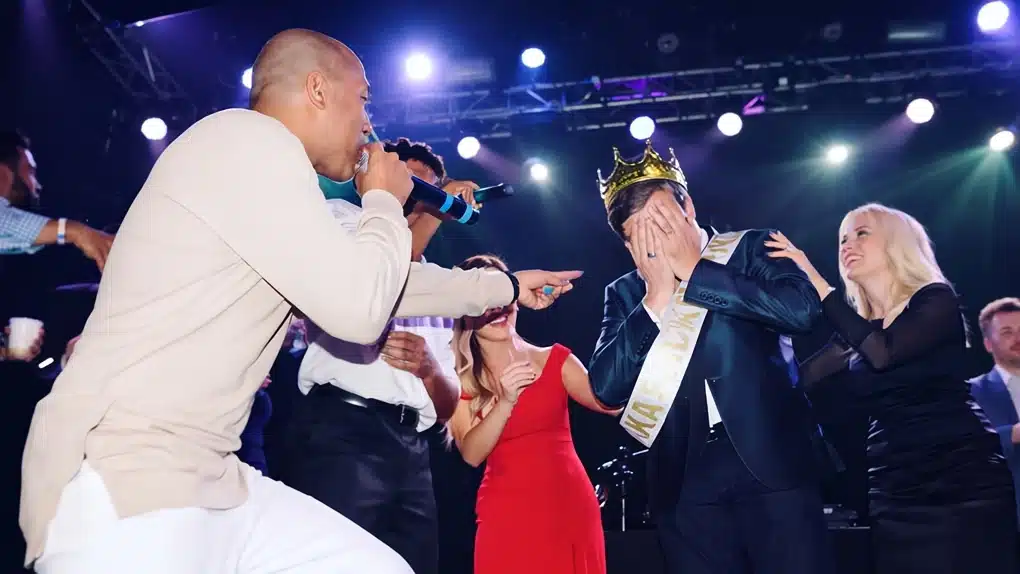
Moments that require audience participation — call-and-response from the MC, crowd competitions, themed segments — break up the pacing and create shared experiences. These are the moments students tend to remember and reference afterward. They do not need to be elaborate to work. They need to be well-timed and executed with genuine energy.
Secondary Room Options
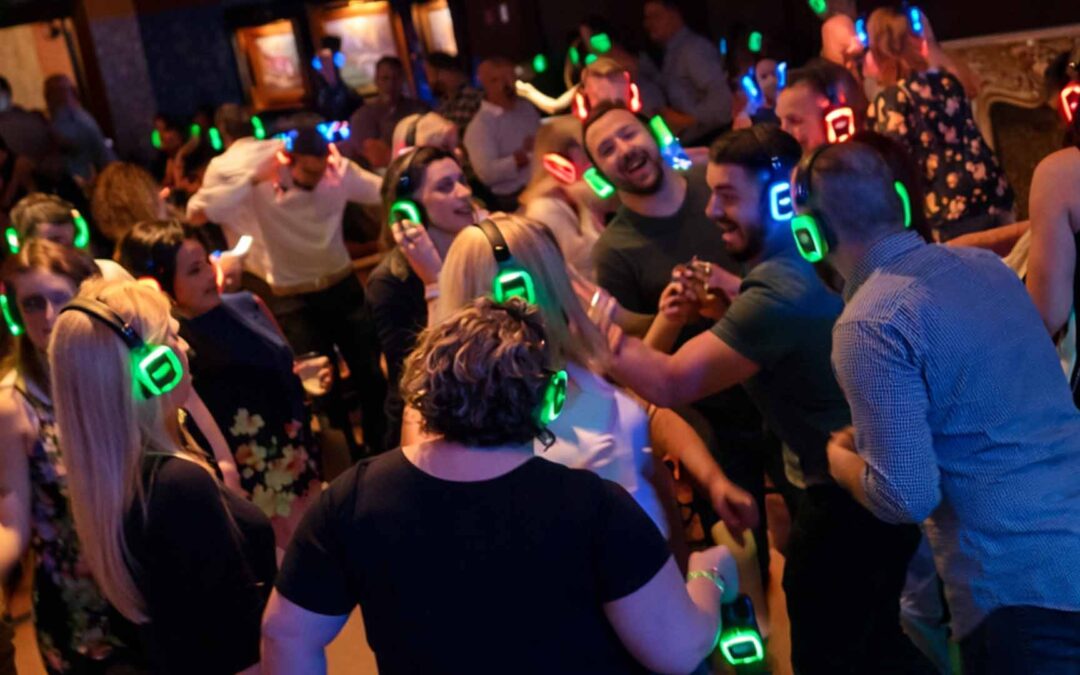
For larger proms, a secondary room or area with a different experience — a silent disco setup, a photo experience, or a lounge space — gives students somewhere to go when they need a break from the main floor without leaving the venue. This reduces early departures significantly and keeps the overall energy of the event higher because the main floor is not being drained by fatigue.
Photo Experiences
Photo booths and 360 video setups serve a dual purpose. They give students a tangible memory from the night and they create a social activity that keeps groups engaged during transitions and lulls. Placement matters — a photo experience positioned near the entrance or main gathering space gets used consistently. One tucked into a corner gets forgotten.
The Most Common Prom Planning Mistakes
These patterns appear consistently across proms that underperform relative to their budget and effort.
Common mistake: Too many slow songs, too early. Slow songs have a place, but clustering them in the first hour before the crowd is warmed up signals to students that the night is winding down before it has started.
Common mistake: No clear start signal for dancing. Students are socially calibrated — they wait for permission to start. Without a clear, energetic moment that signals the dance floor is open and the night has begun, early arrivals stand around indefinitely.
Common mistake: Long announcements at the wrong time. Announcements that interrupt the energy peak for housekeeping information, extended thank-yous, or program elements that could have been handled earlier deflate the room at precisely the wrong moment.
Common mistake: Not enough hype at the beginning. The first 20 minutes of prom set the psychological tone for the entire night. An underwhelming opening is very difficult to recover from, because students form their expectations of the event based on what they experience first.
Common mistake: No late-night momentum plan. The assumption that energy will sustain itself through the end of the event is almost always wrong. Late-night energy requires active management and a planned push in the final stretch.
Common mistake: Ignoring crowd psychology. What works at a different school, in a different year, with a different demographic may not work here. Entertainment professionals who treat every school crowd as a specific audience — not a generic one — consistently produce better outcomes.
Safety and Structure Without Killing the Energy
Structure and energy are not opposites. The proms that feel both safe and genuinely fun are the ones where structural decisions were made to support the experience rather than constrain it.
Staff positioning is a practical example. Administrators and chaperones stationed at the perimeter of the dance area, rather than in the middle of it, maintain visibility and oversight without disrupting the social dynamic on the floor. Students are aware of supervision without feeling surveilled, which is a meaningful distinction for teenage crowd behavior.
Load-in timing and vendor coordination also fall under structure. When the entertainment team, venue staff, and administration have clear, shared expectations about setup timing, sound check windows, and program flow before the event begins, the night runs on its own logic rather than reactive problem-solving.
Ending the event on a high note is a structural decision that often gets overlooked. A strong final song — one that students know, feel, and respond to — followed by a clean, organized exit process leaves a positive last impression. An event that simply stops, with students milling around while staff begins breakdown, ends on a flat note that colors the memory of the whole night.
The last 45 minutes of prom are as important as the first 45. Students who stay until the end are the ones who tell the story of the night. Plan for them deliberately.
The Practical Question to Ask Yourself
When you are booking entertainment for any event, ask this: how much of the night is being directed at the audience, and how much is the audience simply experiencing the music?
If the answer is mostly music with minimal announcements, a skilled DJ-MC handles both roles comfortably. If the answer involves a complex program, multiple transitions, audience participation, or moments where the room’s attention needs to be actively directed — make sure whichever professional you hire has the MC skills to match, or consider whether two roles handled separately gives you a better outcome.
The events that feel effortless — where transitions happen naturally, announcements land clearly, energy never dips at the wrong moment, and the crowd stays engaged from start to finish — are almost always events where both the music and the room were being managed deliberately. That does not happen by accident. It happens because someone was responsible for each.
Practical detail: Brief students and staff in advance about the closing sequence. When everyone knows what the final 15 minutes look like, the transition from event to exit happens with significantly less friction and a much better final impression.
Why Students Talk About Some Proms for Years : Students remember moments, not logistics.
Memory formation at events is not random. The moments students carry forward from prom are almost always characterized by one of a few specific qualities.
Shared peak moments — when the entire room is doing the same thing at the same time — are disproportionately memorable. Everyone singing the same song, a crowd reaction to something unexpected, a moment where the energy in the room was visibly unified. These moments require setup. They do not happen spontaneously at events without intentional pacing.
Feeling included is another consistent factor. Students who felt like the event was designed for them — their music, their energy, their moment — remember it differently than students who felt like observers at someone else’s event. This is why student input in the planning process pays dividends in the experience itself.
Unexpected surprises do not need to be elaborate to be effective. A sudden shift in lighting at the right moment, an unexpected song drop, a crowd moment that nobody saw coming — these small deviations from the expected create the emotional peaks that get encoded as memories.
A strong ending is the last frame of the night’s memory. Proms that end well — with energy, with a clear emotional peak, and with students genuinely reluctant to leave — are remembered completely differently from those that simply run out of time. The ending is not a logistical detail. It is a creative decision that deserves the same intentionality as everything else.
Prom as a Curated Experience
The difference between a prom students talk about for years and one they forget by summer is rarely budget. It is intention. It is the decision to plan for the experience rather than the aesthetic, to think about the energy arc rather than just the program schedule, and to treat the crowd as a specific group of people rather than a generic audience.
Every element of a well-planned prom — the entertainment, the pacing, the student involvement, the structure — is in service of creating an environment where students feel something together. That shared emotional experience is what gets encoded, retold, and remembered.
Planners who approach prom with that goal in mind, rather than a checklist of logistics to complete, tend to produce the events that students actually talk about.
For planners building timelines or evaluating entertainment options, our related planning resources may be helpful.
Great Music & Games | Professional DJ & Event Entertainment | Dallas-Fort Worth | (214) 267-8974