The Difference Between a DJ and an MC (And Why Most Events Need Both)
Two Roles, One Event
Most people booking entertainment for a wedding, corporate event, or celebration ask for a DJ. That makes sense — music is the most obvious entertainment element, and DJ is the term most people know.
What gets overlooked more often than it should is the MC. Not because people don’t want one, but because the role is less visible, less understood, and often assumed to be part of what a DJ does automatically. Sometimes it is. Often it isn’t.
The distinction matters more than most people realize. A DJ who plays the right music but stumbles over announcements, loses control of transitions, or fails to engage the crowd when the energy dips can undermine an otherwise well-planned event. An MC without music direction is just a voice without a soundtrack. When both roles are handled well — whether by one skilled person or two — the event feels completely different from one where only half the equation is covered.
Music fills a room. An MC runs it. Both matter. Neither fully replaces the other.
What a DJ Actually Does
The DJ’s primary job is the music. That description undersells the role considerably, but music management is the foundation everything else is built on.
A professional DJ is responsible for:
- Curating and sequencing music to match the energy arc of the event
- Reading the crowd in real time and adjusting song selection accordingly
- Managing transitions between songs so the floor does not lose momentum
- Operating the sound system and ensuring audio quality throughout
- Controlling tempo and energy shifts to move the event through its phases
A skilled DJ is not pressing play on a playlist. They are making constant decisions based on what is happening in the room — who is dancing, who has left the floor, what the energy needs to be in five minutes, and how to get it there. That active management is what separates professional DJ performance from background music.
What a DJ is not automatically responsible for: making announcements, introducing speakers, managing the program schedule, warming up a crowd verbally, or directing guest behavior. Some DJs do all of these things excellently. Many do not, because those tasks belong to a different skill set.
The distinction: A DJ manages sound and music. An MC manages the audience and the event flow. The skills overlap, but they are not the same thing.
What an MC Actually Does
MC stands for Master of Ceremonies. The title is accurate. The MC’s job is to run the event as a live experience — to be the voice the audience hears, the presence that guides them through the program, and the person who keeps energy and attention where they need to be.
A professional MC is responsible for:
- Welcoming guests and setting the tone at the start of the event
- Making announcements clearly and at the right moments in the program
- Introducing speakers, performers, award recipients, or wedding party members
- Managing transitions between program elements so nothing feels disjointed
- Engaging the crowd during slower moments to maintain energy and attention
- Keeping the event on schedule and adjusting when segments run long
- Coordinating in real time with the venue, catering team, and other vendors
The MC is, in practical terms, the event’s live director. They are the person with the microphone and the timeline, watching the room, talking to the venue coordinator, and making judgment calls about pacing and program flow in real time.
The best MCs are skilled communicators with a strong sense of timing, crowd awareness, and the ability to improvise gracefully when something does not go according to plan. That skill set is distinct from music programming — and it shows when it is present or absent.
The MC is the person who decides what the audience experiences between songs. That space — the transitions, the announcements, the moments of connection — is where events are won or lost.
DJ vs MC at a Glance
| DJ | MC |
|---|---|
| Controls the music | Controls the microphone |
| Manages energy through sound | Manages attention through speech |
| Reads the dance floor | Reads the audience |
| Focuses on transitions between songs | Focuses on transitions between program segments |
DJ
- Controls the music
- Manages energy through sound
- Reads the dance floor
- Focuses on transitions between songs
MC
- Controls the microphone
- Manages attention through speech
- Reads the audience
- Focuses on transitions between program segments
How the Two Roles Work Together
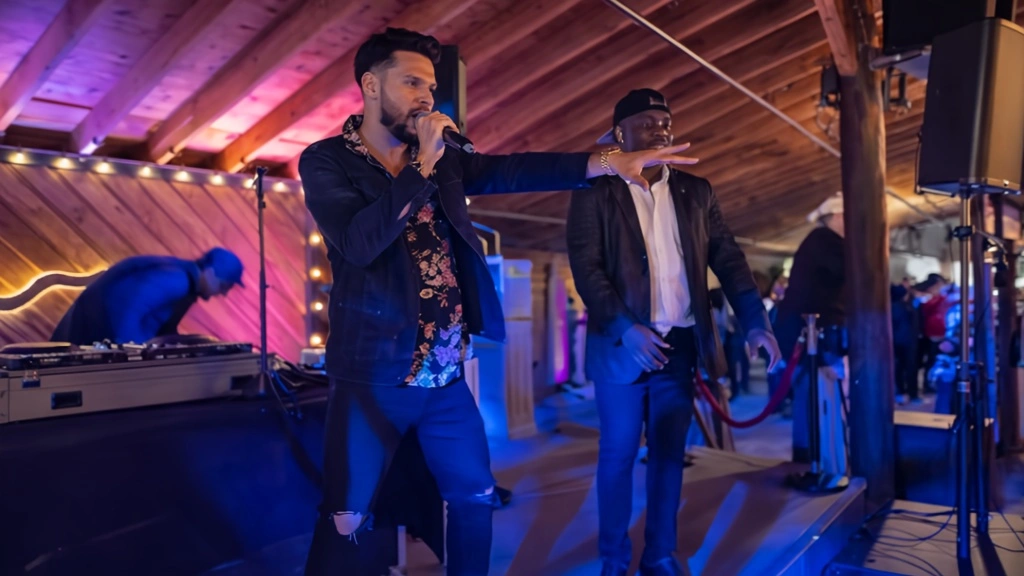
A DJ and MC working in sync is one of the most effective entertainment combinations available for any event. The music creates the emotional context — the energy, the mood, the atmosphere. The MC channels that energy, directs attention, and keeps the program moving through its structure.
Think of it this way: the DJ sets the temperature of the room. The MC decides what happens inside it.
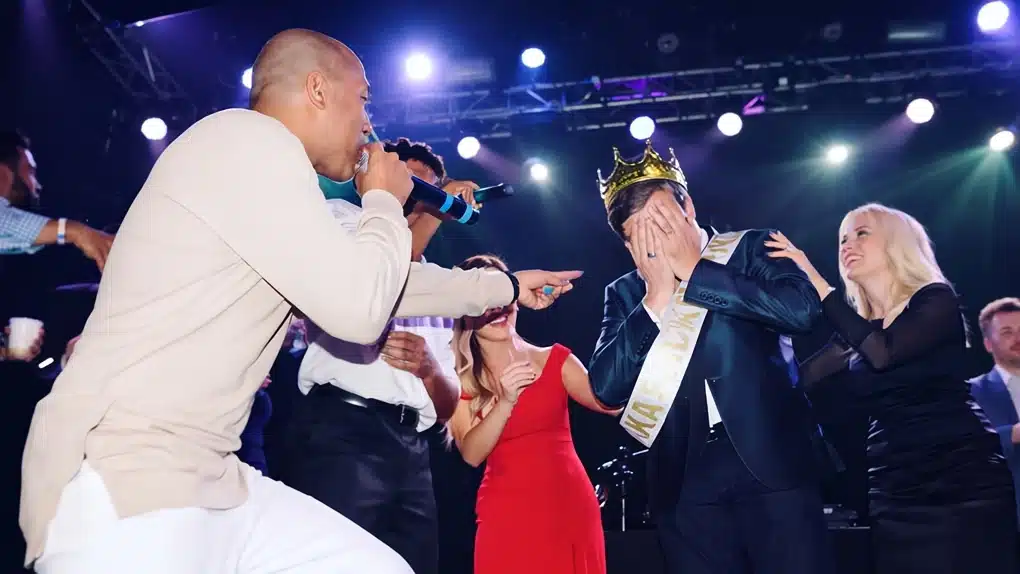
At a wedding reception, the DJ controls the soundtrack from the cocktail hour through the last song of the night. The MC announces the couple’s entrance, introduces the first dance, signals when dinner is served, brings up the best man for his toast, and transitions the room from dinner to dancing. Both roles are active throughout. Neither one is background.
At a corporate gala, the DJ manages the music during arrival, dinner, and the after-party. The MC handles the program — welcoming attendees, introducing executives, presenting awards, and keeping the event on its stated timeline. The two roles pass the room back and forth throughout the night.
| DJ | MC | |
|---|---|---|
| Primary focus | Music selection, sound quality, and energy management | Announcements, introductions, crowd engagement, and program flow |
| Main tool | The DJ setup, mixer, and music library | The microphone and the event timeline |
| Manages | The emotional arc of the event through sound | The audience’s attention and the program structure |
| Active during | All music-driven portions of the event | All program transitions, announcements, and audience-directed moments |
| What happens without them | No music direction, no crowd energy management | Awkward silences, missed cues, flat transitions, confusion |
Can One Person Do Both?
Yes — and many professionals do. A DJ-MC is someone trained and experienced in both music management and live hosting. For the right event type and the right professional, this is an excellent and efficient solution.
It works best when:
- The event has a manageable program with clear, predictable transitions
- The announcements are brief and the primary value is in the music
- The professional has genuine experience in both skill sets — not just one
It is less effective when:
- The program is complex, with multiple speakers, award presentations, or live elements
- The event requires sustained crowd engagement between program segments
- The DJ needs to focus on a technically demanding music set and cannot divide attention
- The event is large enough that one person managing both simultaneously creates quality risk
The honest version of this: Many DJs can make announcements. Far fewer are trained to command a room. When the stakes are high, a major wedding, a large corporate event, a high-profile gala, separating the roles often produces a meaningfully better result.
Experience check: When evaluating a DJ-MC, ask specifically about their MC work. Ask for examples. Ask how they handle a segment that runs long. The answers will tell you whether their MC skills match their DJ skills, or whether one is considerably stronger than the other.
When Your Event Specifically Needs Both Roles Covered
Not every event requires a dedicated MC separate from the DJ. A low-key birthday party with open dancing and minimal program structure can work beautifully with a skilled DJ-MC. But certain event types almost always benefit from having both roles clearly covered — by one very capable person or by two.
Weddings
Weddings have more program transitions than almost any other event type — ceremony to cocktail hour, cocktail hour to reception, dinner to first dance, parent dances, toasts, cake cutting, open dancing. Each of those transitions requires someone directing the room. A dedicated MC handles those moments with the presence and clarity they deserve, while the DJ focuses on making every musical moment land correctly.
Corporate Events and Galas
Corporate events with formal programs, award presentations, or executive speakers require an MC who can maintain professional energy, handle unexpected timing shifts, and bridge the gap between formal program elements and social entertainment. The DJ supports that structure with appropriate music. Neither role can fully absorb the other without something being lost.
School Events
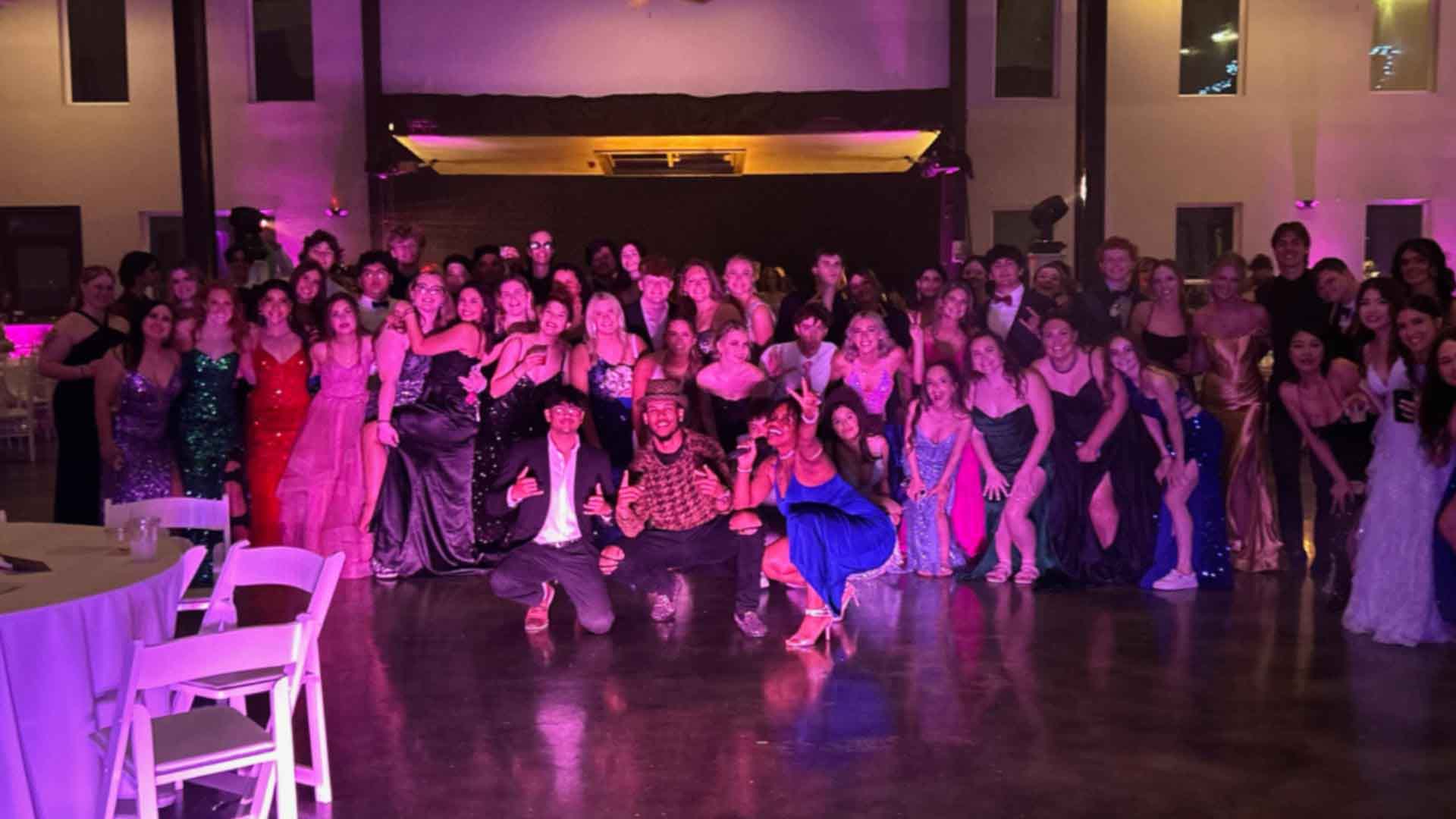
Proms, homecoming dances, and graduation celebrations benefit significantly from an engaged MC presence. School crowds respond to energy and direction. An MC who knows how to work with a younger audience — reading when to build energy, when to step back, and how to keep the crowd invested — makes the difference between a dance people remember and one they leave early.
Fundraisers and Charity Events
Events that include live auction segments, donor recognition, or speaker programs need an MC who can manage the transition between entertainment and program with precision. Losing the crowd’s attention during a fundraising appeal is a costly mistake. The right MC keeps attention focused where it needs to be.
The Practical Question to Ask Yourself
When you are booking entertainment for any event, ask this: how much of the night is being directed at the audience, and how much is the audience simply experiencing the music?
If the answer is mostly music with minimal announcements, a skilled DJ-MC handles both roles comfortably. If the answer involves a complex program, multiple transitions, audience participation, or moments where the room’s attention needs to be actively directed — make sure whichever professional you hire has the MC skills to match, or consider whether two roles handled separately gives you a better outcome.
The events that feel effortless — where transitions happen naturally, announcements land clearly, energy never dips at the wrong moment, and the crowd stays engaged from start to finish — are almost always events where both the music and the room were being managed deliberately. That does not happen by accident. It happens because someone was responsible for each.
The best events feel like they ran themselves. They didn’t. Someone was managing the music and someone was managing the room — and both were doing their job well
Two Roles, One Seamless Night
The DJ and the MC are complementary. One without the other leaves something real on the table — either music without direction, or direction without the right soundtrack. Together, they cover the full experience of what your guests hear, feel, and remember about your event.
Understanding the distinction before you book gives you the right questions to ask, the right expectations to set, and a much clearer picture of what you are actually getting when someone says they will handle your entertainment.
Great Music & Games | Professional DJ & Event Entertainment | Dallas-Fort Worth | (214) 267-8974